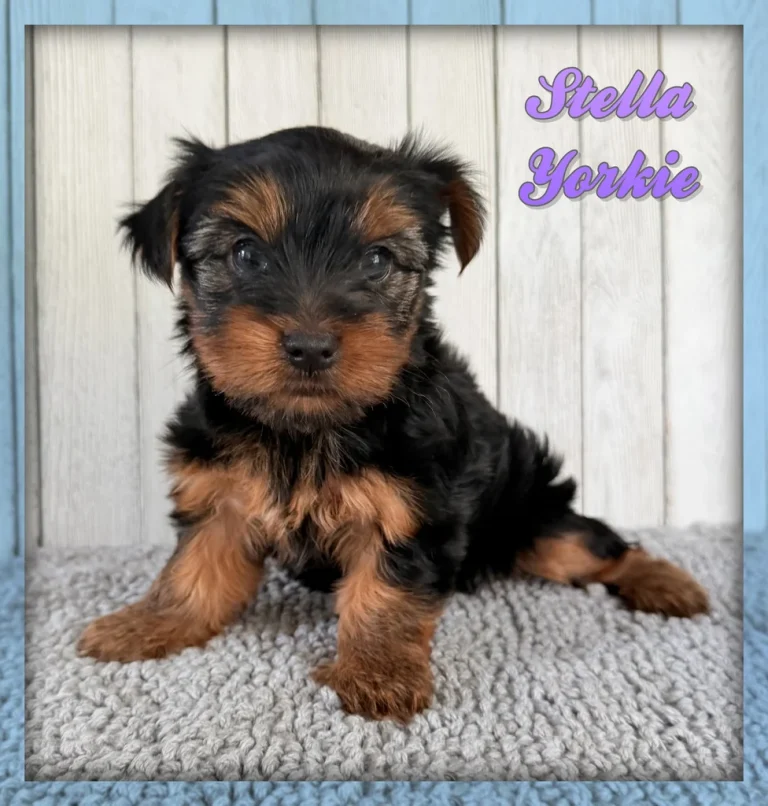
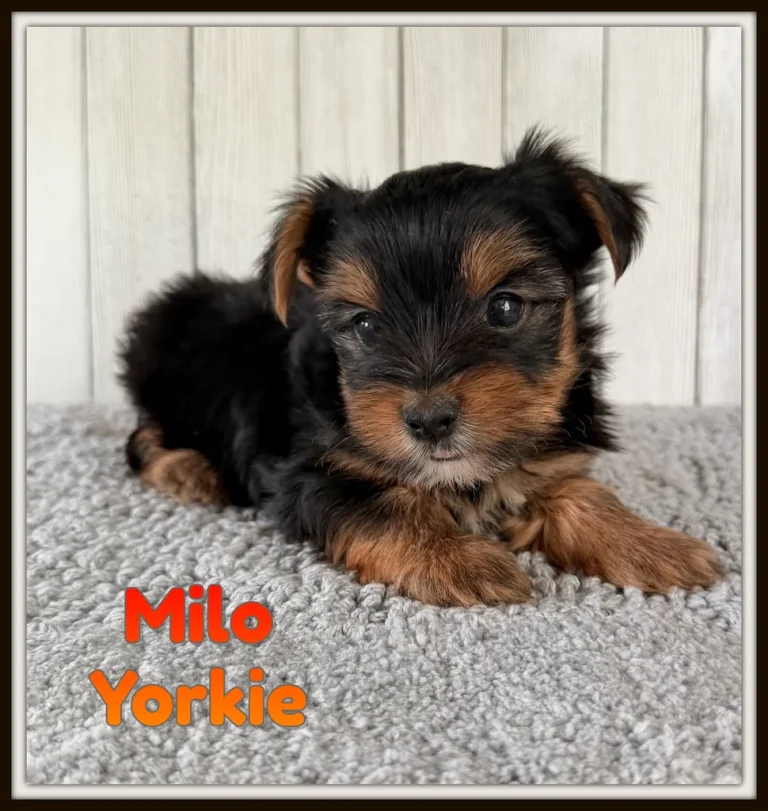
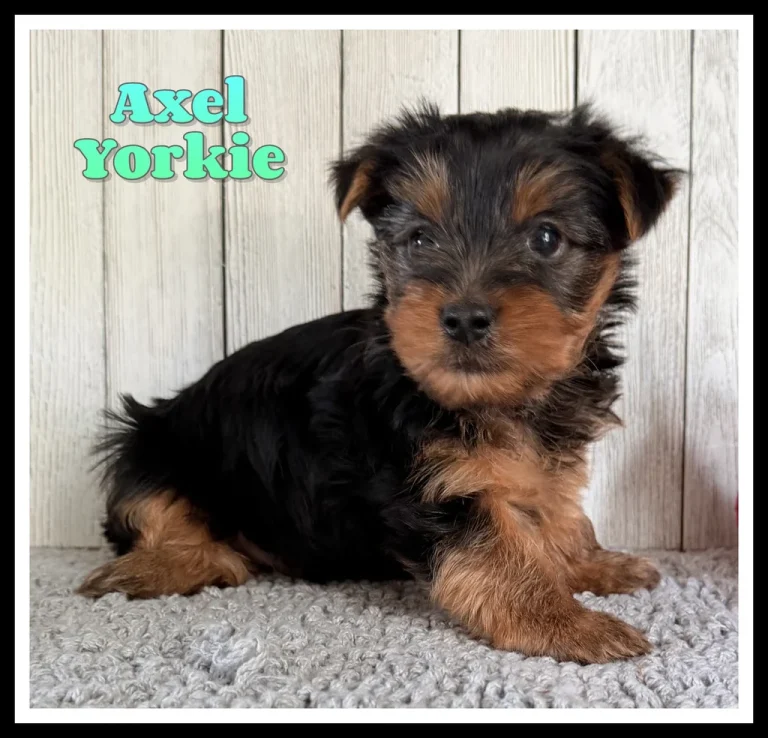
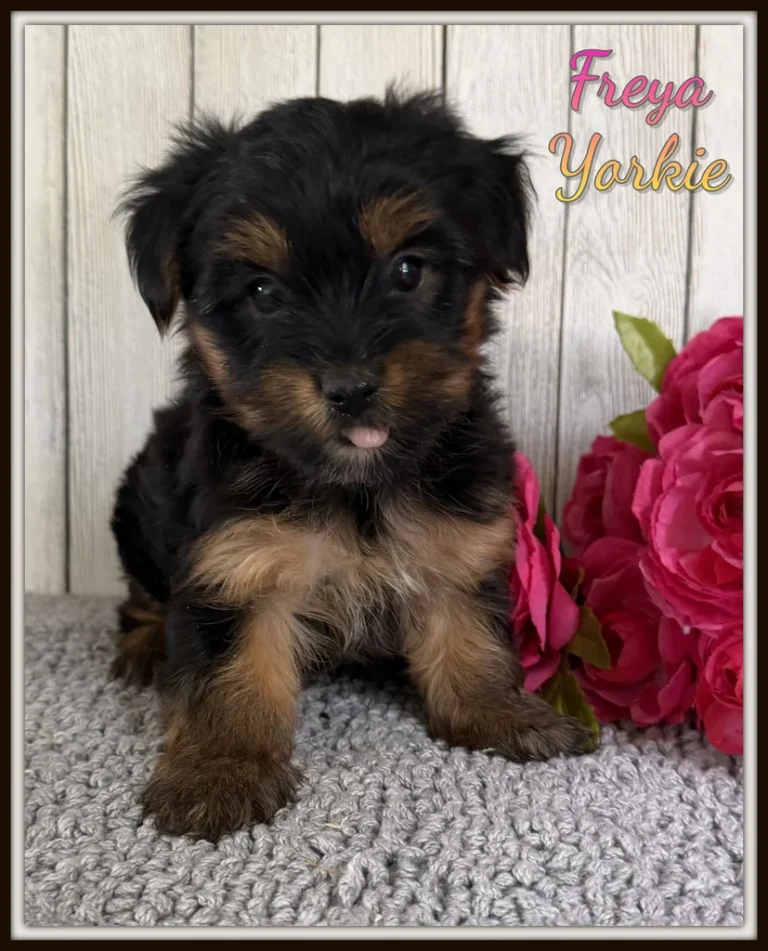
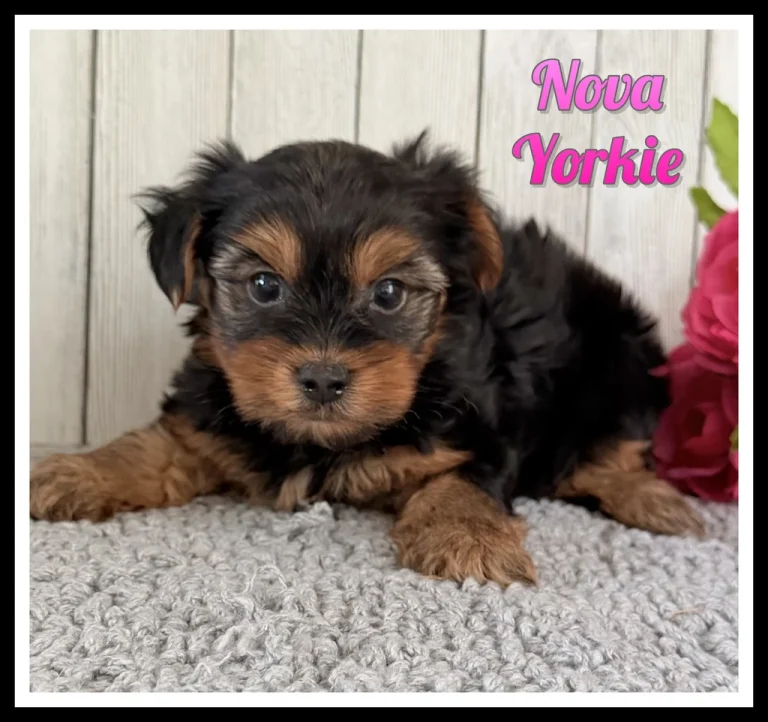
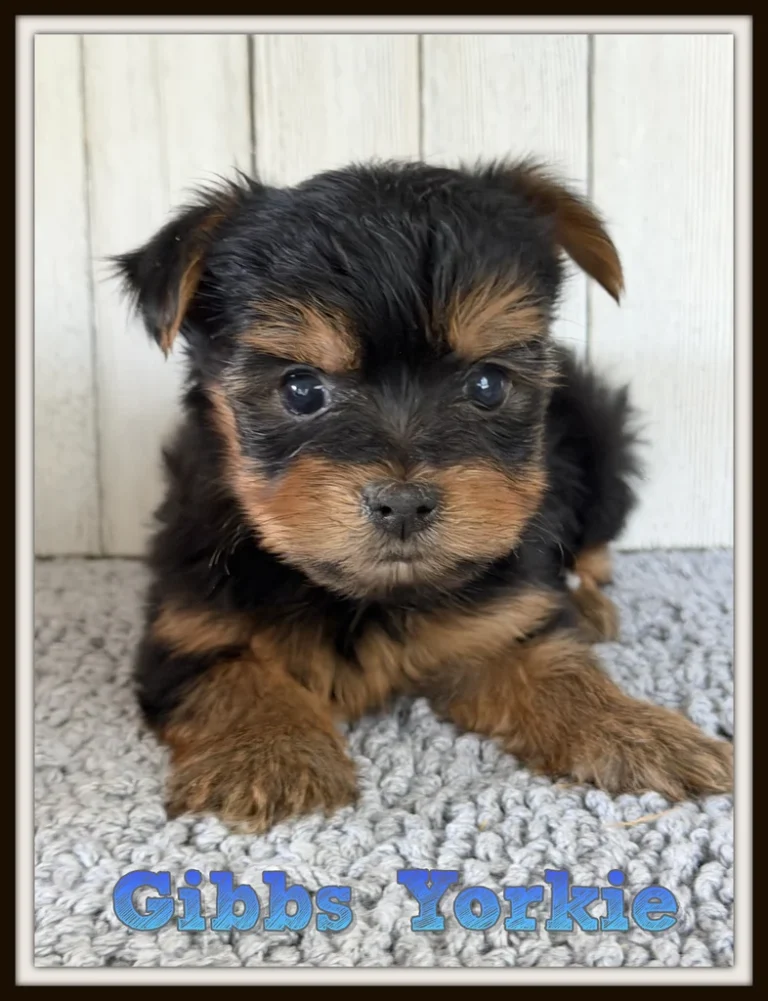
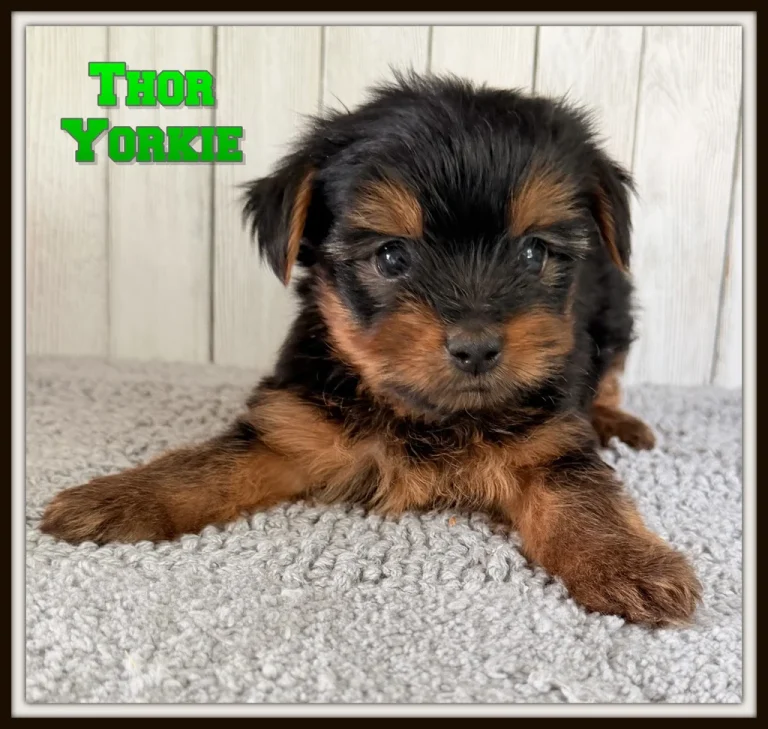
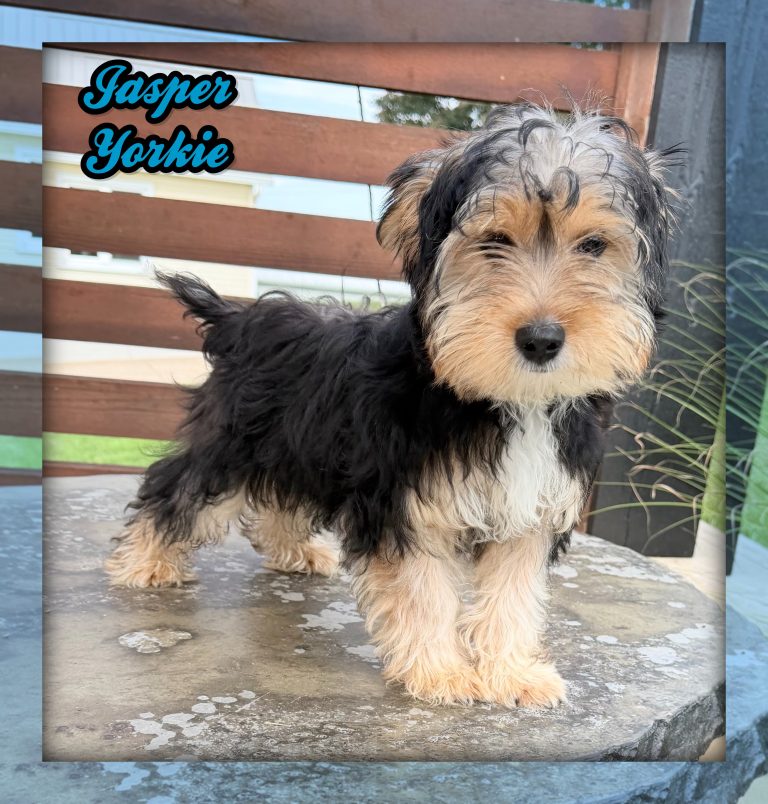
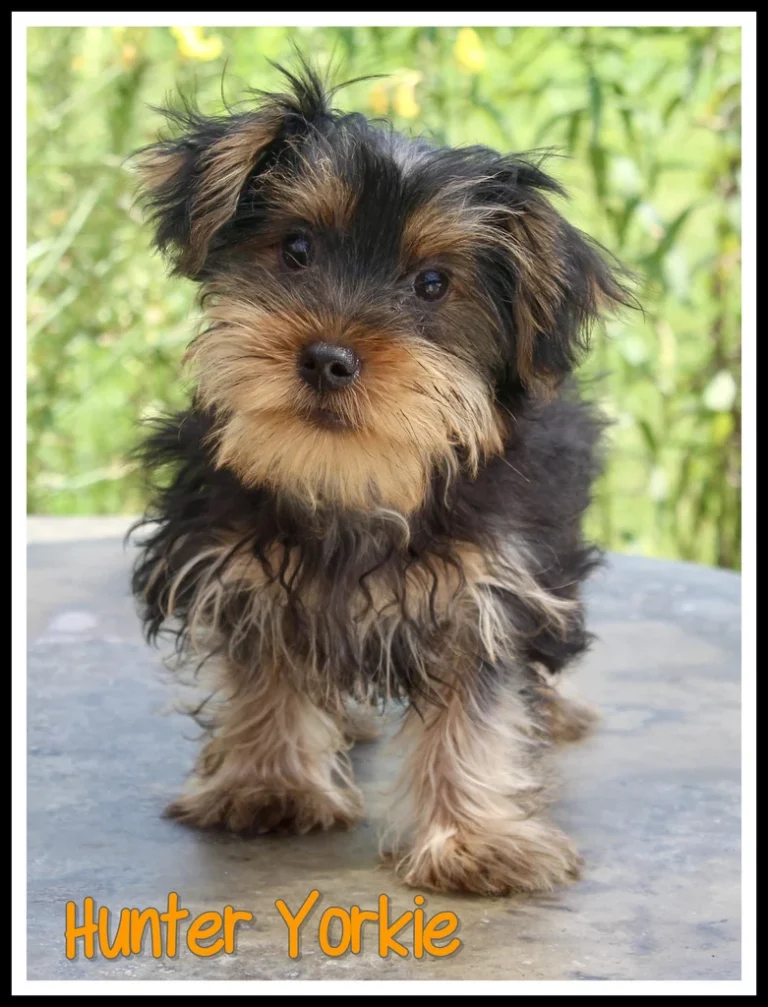
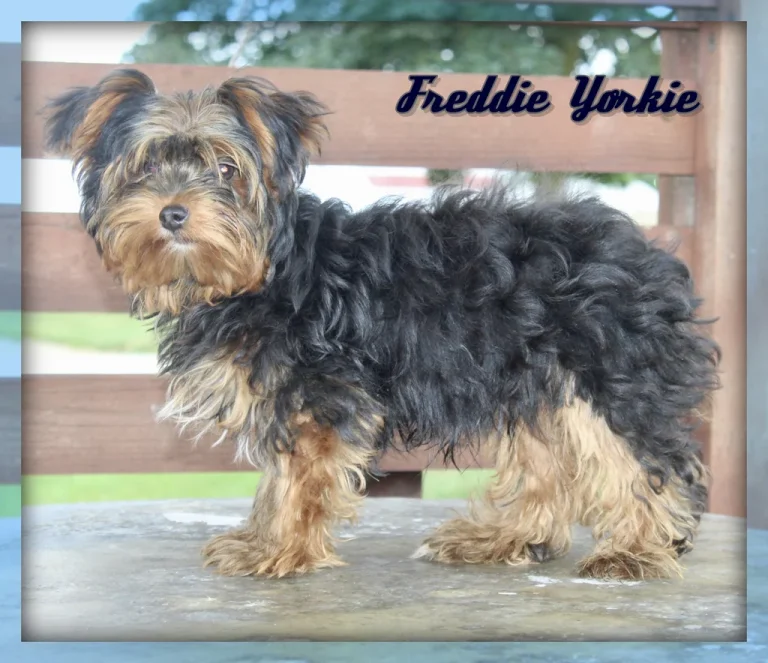
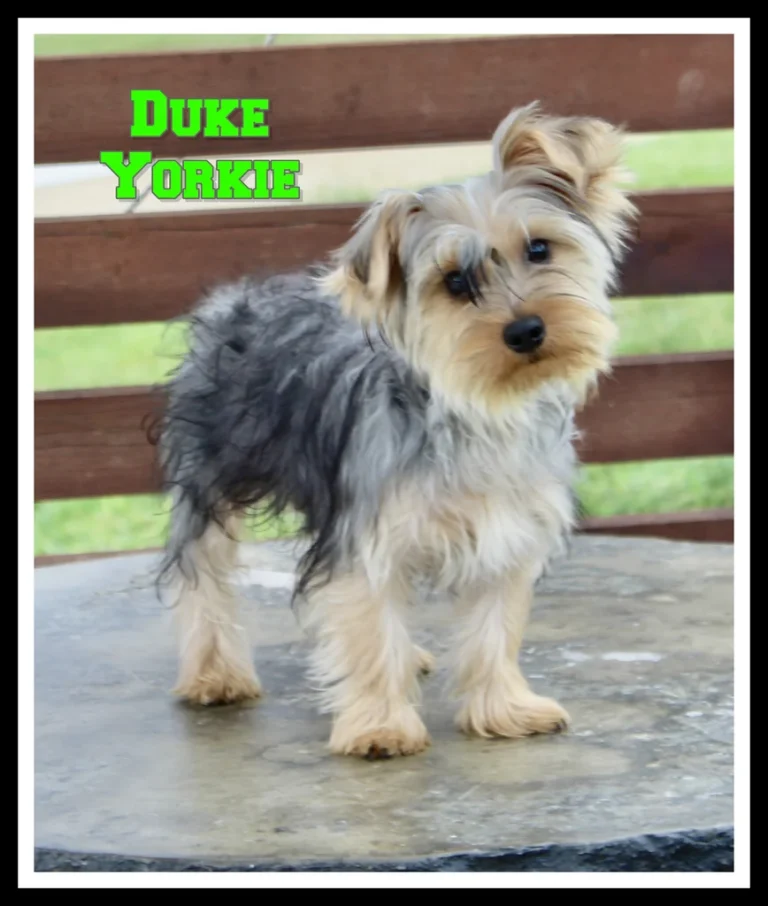
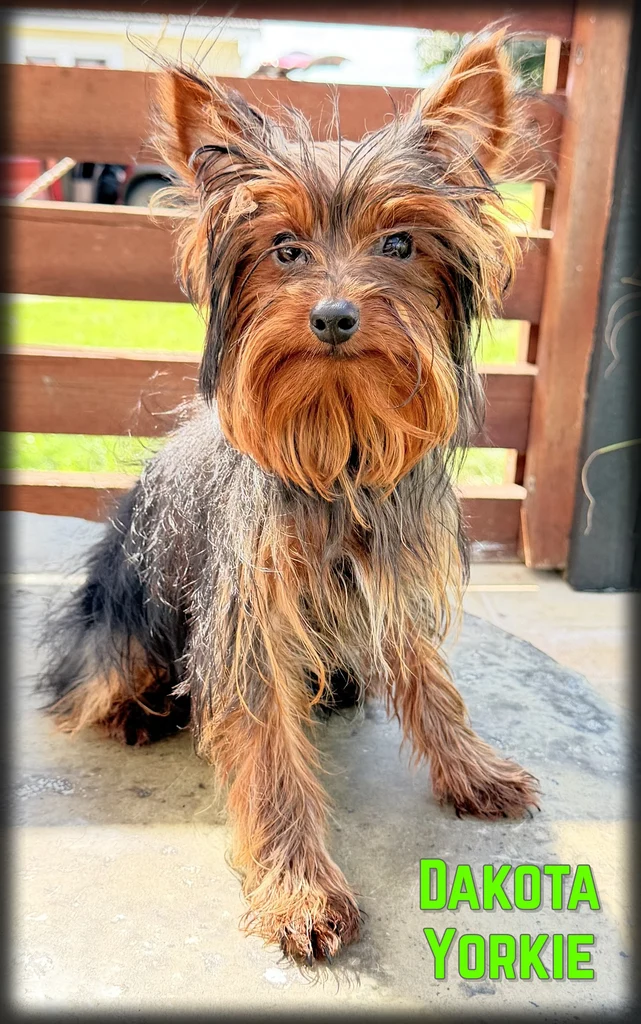
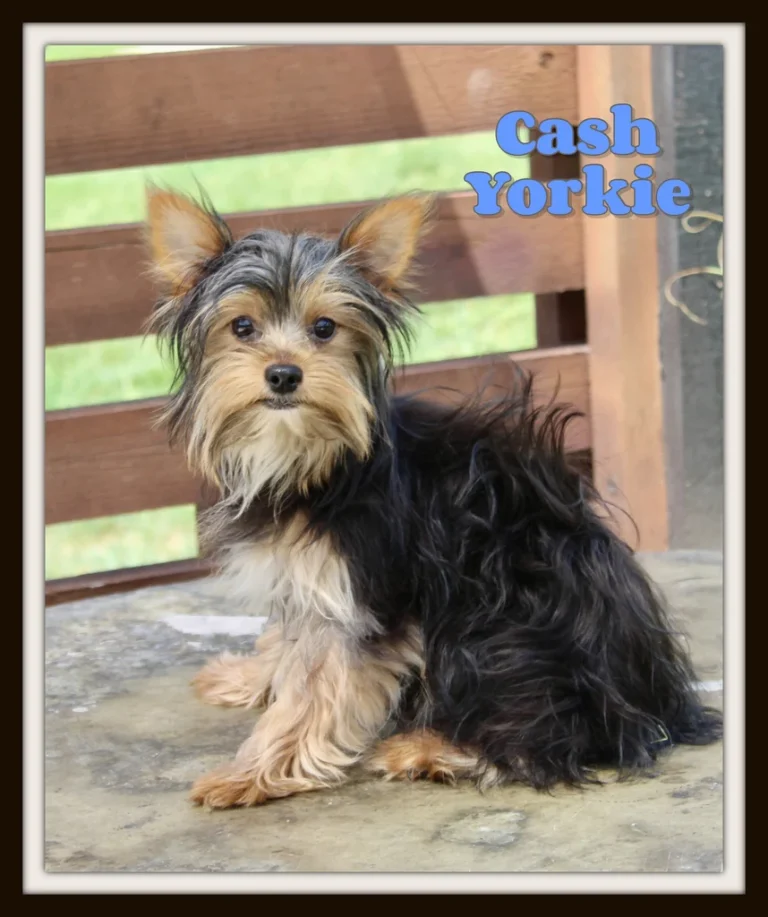
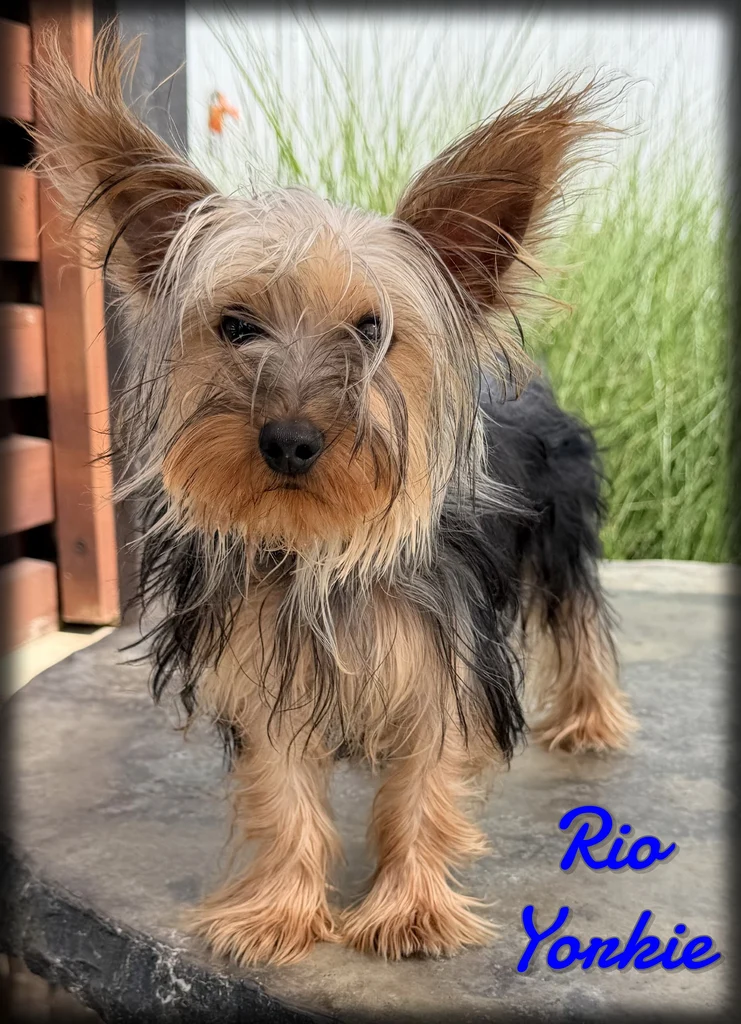
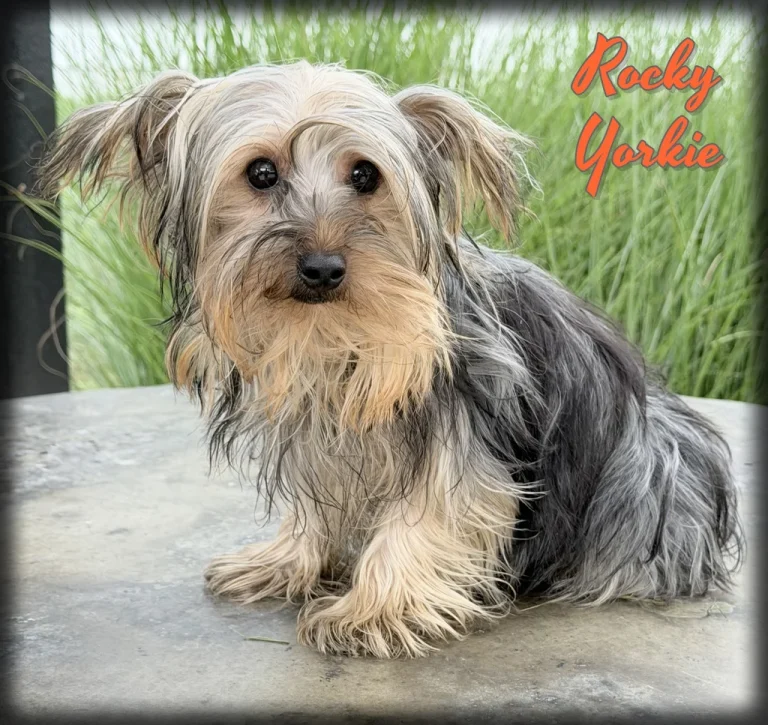
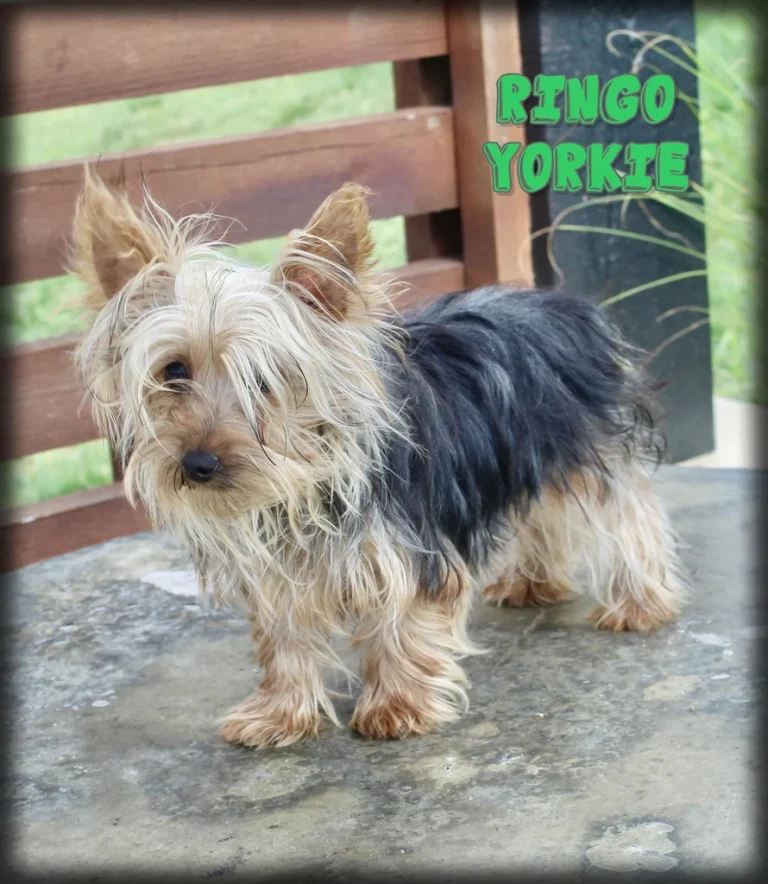
Our Yorkshire Terrier puppies are raised inside our family home and kennel in Sugarcreek, Ohio, and handled daily from three weeks old and socialized to the noise and motion of a busy household before they go home. Every parent dog is health and genetically tested, and every puppy leaves microchipped, vaccinated, vet-checked, and backed by a one year health guarantee. Visit us by appointment, or we will deliver your Yorkie anywhere in the United States. If you have additional questions or need help picking the perfect puppy, give us a call. (330) 834-8545
You meet a Yorkshire Terrier and picture a small dog who sits on a pillow all day. Then you spend an hour with one. What you get instead is a bold, busy little terrier who thinks she runs the house, and who is usually right.
We have raised Yorkshire Terriers on our family farm in Sugarcreek, Ohio for quite some time now. In that time, we have answered the same questions from many families, and we have watched people fall in love with this breed for reasons they never expected. This page covers what we tell families who call us, including the parts that are less flattering. A Yorkie is a wonderful dog for the right home and a frustrating one for the wrong home, and we would rather you know which you are before you fall in love with a photo.
The Yorkshire Terrier was not built to be a lap dog. It was built to kill rats.
In the middle of the 1800s, workers from Scotland moved south into the county of Yorkshire in northern England to take jobs in the coal mines and textile mills. They brought their small terriers with them. Those Scottish dogs were crossed with local English terriers, and the mix produced a small, quick, fearless dog that could squeeze into tight spaces and clear out the vermin that ruined stored cloth and grain. Mill workers carried these dogs in their coat pockets and turned them loose on the rats at the end of a shift.
One dog changed everything. Huddersfield Ben was born in 1865 and lived only six years, but in that short life he won 74 prizes in the show ring and in ratting contests. He was large for the breed at about eleven pounds, yet he consistently sired much smaller puppies. Nearly every Yorkshire Terrier alive today traces back to him. Breeders still call him the father of the breed.
The name Yorkshire Terrier came into use in 1874, after years of the dogs being shown under the clumsy label of Broken Haired Scotch Terrier. The American Kennel Club registered the breed in 1878. Wealthy Victorian women took a liking to the little dogs, put ribbons in their hair, and turned a mill worker’s ratter into a fashionable companion in about one generation.
That history has not washed out of the breed. Underneath the silky coat is a working terrier, and that shows up in how she guards the door, how she chases the neighbor’s cat, and how stubborn she can be on a Tuesday morning when she does not feel like coming inside.
The AKC breed standard is short and clear on this point. A Yorkshire Terrier should not weigh more than seven pounds. Most adults land between four and seven pounds and stand about seven to eight inches tall at the shoulder.
We breed toward that four to seven pound range on purpose, and our reason goes against what a lot of the internet will tell you.
There is no such thing as a teacup Yorkshire Terrier. The AKC does not recognize the term, the Yorkshire Terrier Club of America does not recognize it, and no kennel club anywhere in the world lists it as a size class. It is a marketing word, and it usually carries a price tag two or three times what a healthy puppy costs.
Dogs sold as teacups are typically produced by breeding the smallest dog in one litter to the smallest dog in another, over and over. That concentrates every weakness those two dogs carry. Puppies born that small are far more likely to have low blood sugar crises, soft bones that break easily, liver shunts, and organs that never form correctly. Their mothers often need surgery to deliver them. Many of them do not reach their second birthday.
We have turned down families who called us asking for a two-pound puppy, and we will keep turning them down. If a Yorkie under four pounds is born in one of our litters naturally, we place her with an experienced adult home. We do not breed for it, but from our experience, we can guess or estimate a puppys adult weight, but we don’t gurantee it.
A healthy Yorkie is already a very small dog. Five pounds tucks under one arm without any trouble.
Yorkshire Terriers have a single coat of fine, silky hair with no undercoat. The texture is much closer to human hair than to typical dog fur, and it grows continuously instead of shedding out with the seasons. Because of that, very little hair ends up on your furniture, and families who react to most dogs often do fine with a Yorkie.
We want to be honest about the word hypoallergenic, because you will see it everywhere. No dog is truly hypoallergenic. People react to dander and saliva, not to hair itself. What is true is that a coat built like this one puts far less dander into your home than a thick double coat does. Many allergy sufferers live comfortably with this breed. Some still react. If allergies are the reason you are choosing a Yorkie, spend an hour with an adult one before you commit.
The AKC recognizes four color combinations:
The blue is not a bright blue. It is a dark steel gray that reads almost black in low light and shows its true shade in sunlight.
This catches nearly every first time owner off guard, so we tell families about it before they pick a puppy.
Yorkie puppies are born black and tan. The coat is dark, thick, and a little fuzzy. Somewhere between six months and eighteen months of age, that puppy coat gives way to the adult coat, and the black lightens into the blue the breed is known for. The tan usually gets richer and moves toward gold. The texture changes too, from soft and cottony to fine and silky.
The awkward stage is real. For a few weeks the old coat and the new coat grow at the same time, and the two textures tangle against each other. Puppies who never had a mat in their lives suddenly get them behind the ears and under the legs. The tangling is normal and it does not last, but this is the one stretch where daily brushing helps a lot. Families who skip it usually end up at a groomer having the coat shaved down.
You will find breeders advertising chocolate Yorkies, parti Yorkies, merle Yorkies, and other unusual colors at very high prices. Some of those colors come from recessive genes that a few purebred lines quietly carry. Others cannot come from the breed at all. Merle is the clearest example, because that gene does not exist in Yorkshire Terriers, which means another breed sits somewhere in the pedigree.
We are not going to tell you those dogs cannot be lovely pets, because plenty of them are. We are telling you not to pay a premium for the color. Rarity in this breed is a sales pitch, not a mark of quality, and in some cases the same genes that change the coat color are linked to skin and eye problems.
Ask ten Yorkie owners to describe their dog and you will hear the same handful of words. They say bold, bossy, funny, and stuck to me like a shadow.
The confidence is the first thing you notice. A Yorkie will walk up to a Great Dane at the park with no hesitation at all. She barks at the mail carrier from the back of the couch as though she is holding the line, and she supervises you closely while you cook. The breed standard asks for a dog who carries herself with an air of self importance, and every Yorkie we have raised has delivered on it.
The attachment is the second thing. Yorkshire Terriers bond hard to their people, usually forming the tightest bond with whoever handles their food and their walks, while staying affectionate with everyone in the household. She follows you from room to room, and she notices when you change your routine before you do. Families tell us over and over that they did not expect a dog this small to be this tuned in to them.
Those dark eyes hide a sharp mind. Yorkies pick up new cues quickly and enjoy the work when the sessions are short and food is involved. They also have an independent streak, and a Yorkie who has figured out that you do not follow through will happily ignore you. Consistency does more for this breed than firmness ever will.
The barking deserves its own mention, because it is the complaint we hear most often from owners of Yorkies who were not trained early. A dog bred to alert her handler to rats is a dog who will alert you to a leaf blowing past the window. The instinct is not a flaw. Left to bark at whatever she likes, though, she turns it into a habit that will wear on your neighbors. We will cover how to work with it further down.
We would rather place fewer puppies than place them in homes that turn out to be a poor fit. Here is our honest read after years of doing this.
Yorkies do well with: single adults, couples, retirees, people who work from home, apartment dwellers, and families with school age children who have been taught how to handle a small dog.
Yorkies struggle with: homes where everyone is gone ten hours a day, households with toddlers, families who want an outdoor dog, and anyone hoping for a low maintenance pet.
The children question comes up constantly, so let us be direct about it. A four pound dog can be seriously hurt by a fall from a child’s arms or by a toddler who lands on her. The risk runs the other way too, because a small dog who gets grabbed and squeezed will eventually defend herself. We generally recommend waiting until children are school age, and we recommend teaching them to pet the dog on the floor rather than picking her up. Families who set that rule from day one almost never have a problem.
Other pets are usually fine. Most Yorkies get along well with cats and other dogs, especially when they meet them young. Watch the size gap, though. A Yorkie has no sense of being small, and a friendly seventy pound dog who rolls the wrong way can injure her without meaning to.
The alone time question carries more weight with this breed than with most. Yorkies are companion dogs in the fullest sense, and one who is left by herself all day tends to bark, chew, and become anxious. If your household is empty from seven in the morning until six at night with nobody stopping in, we would gently steer you toward a different breed.
Small does not mean sedentary. Families underestimate the exercise needs of this breed more often than anything else.
Plan on thirty to forty-five minutes of activity a day. That does not have to be one long walk. Two short walks, a game of fetch down the hallway, and ten minutes of training usually covers it. Yorkies enjoy going places, and a walk around a new block does more for them than the same loop every day.
The mental side counts as much as the physical side. You have a smart dog here, bred to work out a problem on her own, and a bored Yorkie invents her own entertainment. Puzzle feeders work well. So does hiding a treat under one of three cups and letting her figure out which one. A short thinking game will tire this breed the way a long run tires a bigger dog.
One piece of gear is not optional here. Buy a harness and leave the collar for her ID tags. The health section explains what is at stake.
Yorkshire Terriers have a reputation for being difficult to house train. We think that reputation is unfair, and that it comes down to bladder size more than anything else.
A four pound puppy has a bladder about the size of a walnut. She is not being stubborn when she cannot hold it for four hours. She physically cannot. Most Yorkies become reliable somewhere between six and eight months of age, which is later than a Labrador and completely normal for a toy breed.
What works:
Many families in apartments or cold or wet climates train to an indoor pad as a backup. Using pads works, but we suggest picking one system and sticking with it for the first few months so the puppy is not guessing.
Start bark prevention training early, because this habit is far harder to break when your Yorkie is two years old than when they are four months.
Teaching your puppy a word that means the noise is over is the key to handling barking. Let her bark twice, then say the word, and reward her the moment she stops barking. She learns that being quiet earns something and continual barking does not. Do not yell over the barking, because to a dog that sounds like you have joined in.
Manage the environment to help reduce the temptations. A Yorkie who can see the sidewalk from the back of the couch will bark at everyone who walks past. Move the couch or close the blinds, and that will remove the biggest problem, the temptation.
The window for early socialization closes early. Between about three weeks and sixteen weeks, a puppy is forming her first impressions of the world, and what she meets in that stretch shapes how she handles new things for the rest of her life.
Part of that socialization window closes before your puppy ever comes home, which is why the way a breeder spends those weeks makes such a difference. Your job is to pick up where we leave off. Introduce her to new people, new surfaces, new sounds, car rides, and calm dogs. Keep every new introduction positive and short. A confident adult Yorkie is almost always a puppy who met the world early and enjoyed it.
The coat is the most beautiful thing about this breed and the biggest ongoing commitment. How much work it takes depends entirely on the length you choose.
The puppy cut keeps the coat trimmed to roughly one inch all over, with the face tidied up so she can see. Most pet owners choose this length and we recommend it. It needs brushing two or three times a week and a professional trim every six to eight weeks.
The show coat is grown to floor length, parted down the spine, and hangs straight on both sides. It looks stunning and it requires daily brushing without exception. Show owners wrap sections of the coat in paper to keep it from breaking. Growing a show coat is a serious hobby, not a casual choice.
Neither choice is wrong. Just be honest with yourself about how much brushing you will still be doing once the novelty wears off.
Brushing. Use a pin brush first to work through the surface, then follow with a metal comb to catch what the brush missed. Work in sections and start at the feet, moving upward. Brushing a dry coat causes breakage, so mist lightly with water or a leave in conditioner first.
Bathing. Every two to three weeks for most pet coats. Use a gentle dog shampoo and rinse until you are certain all of it is out, because leftover soap makes her itch. Blow dry on a low, cool setting while brushing, since a Yorkie coat left to air dry tends to mat.
Face. Wipe under the eyes daily with a damp cloth. The hair there catches moisture and stains, and the area stays cleaner with thirty seconds of attention a day than with a big cleanup once a week. Keep the hair trimmed out of her eyes or tie it up in a topknot.
Ears. Yorkie ears stand upright, which helps air circulate, but hair grows around the opening and traps dirt. Check them weekly and keep the hair around the ear tips trimmed short.
Nails. Trim every three to four weeks. Long nails change how a small dog stands and put strain on her legs.
Teeth. Brush daily if you can, and several times a week at minimum. The health section below explains why dental care carries more weight for a Yorkie than for almost any other breed.
Wait until your puppy is fully vaccinated, usually around sixteen to twenty weeks. Keep the first visit short, under an hour, and ask the groomer to focus on making her comfortable instead of finishing a full trim. A dog who decides at four months that grooming is pleasant will be easy to groom for the next fifteen years.
Yorkies have tiny stomachs and fast metabolisms. That combination changes how you feed them.
Puppies need three to four small meals a day. Skipping meals carries real risk for a puppy this size, and we explain why further down.
Adults do well on two measured meals a day. Free feeding, where food sits out all day, is a bad idea for this breed. It makes house training harder, it hides the early warning sign of a dog going off her food, and it leads to weight gain that puts pressure on small knees.
Choose a quality small breed formula. The kibble pieces are sized for a small mouth, and that makes more difference than people expect. Measure the portions instead of guessing, because a Yorkie who is one pound overweight is carrying the equivalent of twenty extra pounds on a person.
Change foods slowly when you change them at all. Mix the new food into the old over seven to ten days. This breed has a sensitive stomach and abrupt switches usually end in diarrhea.
Yorkies can also be very picky eaters. Resist the urge to fix that by adding richer and richer toppers, because you will train her to hold out for something better. If she skips a meal, pick the bowl up and offer it again at the next scheduled time.
Keep treats to a small fraction of her daily food. A single biscuit sized for a Labrador can be a quarter of a Yorkie’s daily calories.
Yorkshire Terriers are long lived dogs. Twelve to sixteen years is normal, and we have families whose dogs from us are still going strong past fifteen.
They do carry breed specific risks, though, and we would rather you understand them now than learn about them at an emergency clinic. Not every Yorkie develops these conditions. Most Yorkies never develop most of them. But you should know what you are watching for.
The windpipe is held open by rings of cartilage. In some Yorkies those rings weaken over time and the windpipe flattens, which makes breathing difficult. The classic sign is a dry, honking cough that sounds a bit like a goose.
Collapsing trachea is the reason we ask every family to walk a Yorkie on a harness instead of a collar. A collar puts direct pressure on the windpipe every time the dog pulls, and in a breed already prone to this problem, that pressure adds up over years. A harness spreads the pull across the chest. It costs about fifteen dollars and it is the cheapest insurance you will ever buy for this breed.
Keeping her at a healthy weight helps as well. Mild cases are managed with weight control and medication, and many dogs live full lives with it.
The kneecap sits in a shallow groove on a Yorkie’s leg, and sometimes it slips out of that groove. Vets grade it from one to four, with one being mild and four being severe.
The sign to watch for is unmistakable once you know it. Your dog will be trotting along, then hop on three legs for a few steps, then drop the fourth leg back down and carry on as though nothing happened. That skip is the kneecap sliding out and popping back in.
Grades one and two are usually managed without surgery. Higher grades often need surgical repair to prevent arthritis later. You can lower the risk by keeping her lean and by discouraging repeated jumping off furniture. A set of pet steps beside the couch is a small purchase that spares a lot of wear on small joints.
Dental disease is the most common health problem in the breed and the one owners overlook most often.
Your Yorkie carries the same number of teeth as a German Shepherd packed into a much smaller jaw. The crowding traps food and bacteria, tartar builds up quickly, and by middle age an unbrushed Yorkie frequently has gum disease serious enough to cost her teeth. Infection in the mouth does not stay in the mouth either, and it can affect the heart and kidneys over time.
Daily brushing with a toothpaste made for dogs will do more for your Yorkie’s long term health than anything else on this page. Most adults also need professional cleanings from their vet. Watch for bad breath, red gums, dropping food while eating, or chewing on one side.
Yorkie puppies also commonly keep their baby teeth after the adult teeth come in, which crowds the mouth further. Your vet will usually pull any that have not fallen out by the time she is spayed or neutered.
Very young and very small Yorkies can drop into low blood sugar quickly, especially after stress, a long play session, a missed meal, or a bout of illness. The signs are lethargy, wobbliness, a glassy stare, and in serious cases tremors or collapse.
If you see this, rub a small amount of honey or corn syrup on her gums and call your vet immediately. The sugar buys you time, but she still needs to be seen. We send every puppy home with written feeding instructions for this reason, and it is why we push back on anyone who asks about skipping meals to keep a puppy small.
Most puppies grow out of this risk by four to six months as they gain size.
A portosystemic shunt is a blood vessel that formed incorrectly before birth, letting blood bypass the liver instead of passing through it. Since the liver is what filters waste out of the blood, toxins build up in the body.
Puppies with a shunt tend to grow slowly, stay thin, and act disoriented or drowsy after eating. Serious cases cause seizures. It is diagnosed with blood work and often corrected with surgery.
This condition shows up more often in dogs bred purely for tiny size, which is one more reason we breed toward the healthy end of the standard.
The top of the thigh bone loses its blood supply and begins to break down, usually between four months and a year old. You will see limping on a back leg that gets worse rather than better, and often muscle loss in that leg. Surgery generally resolves it and dogs recover well.
Yorkies can develop dry eye, cataracts, and a condition where extra eyelashes grow in the wrong place and rub the surface of the eye. Squinting, redness, pawing at the face, or unusual discharge all warrant a vet visit instead of a wait and see approach.
Health starts before a puppy is born.
Both parents behind every litter are health tested and genetically tested before we pair them, with screening aimed at the conditions known in this breed. We look at structure and temperament as closely as we look at test results, because both pass down to the puppies. We breed toward the four to seven pound range that the breed club ties to the longest, healthiest lives, and we do not chase smaller.
Our puppies are raised inside our home and kennel. They grow up being surrounded by our family and the ordinary noise of people and children. Every puppy goes through Early Neurological Stimulation between three and sixteen days of age, a short daily handling routine that research has linked to better stress tolerance later in life. From three weeks on, each puppy is handled daily.
Because we spend so much time with our puppies, we know them as individuals before they leave. Yorkies vary more than people expect. Some are bold and busy while others are quiet and thoughtful. We use what we learn about each puppy to help match her to the household that suits her, and we will tell you plainly if the puppy you picked from a photo is not the right one for your home.
Every puppy goes to her new family with a full veterinary exam, a microchip, age appropriate vaccinations, complete medical records, a small bag of the food she has been eating, a toy, and a blanket that smells like her littermates. Each one carries a one year genetic health guarantee.
We want you to buy a healthy puppy, whether it is from another reputable breeder or us. If you are talking to other breeders, ask these questions:
The purchase price is the smallest part of the number. Plan for these ongoing costs:
Eight weeks to six months. These are the busiest months you will have with her. You will be house training, socializing, feeding three or four times a day, and booking that first grooming visit. Everything you teach her now sticks.
Six months to eighteen months. The coat changes over. She reaches close to her adult weight by around ten months, and she may start testing the rules she learned as a puppy. Stay consistent and the testing stops.
Two to eight years. These are her easiest years by a wide margin. She knows the routine, she has settled into herself, and she is at her best. Keep up the dental care and keep her lean.
Nine years and up. She will age slowly, and most Yorkies stay playful well past ten. Move to twice yearly vet visits, add pet steps if you have not already, watch for stiffness in her back legs, and expect her to sleep a little more. Many Yorkies are still doing their rounds of the house at fourteen.
We welcome families to our farm in Sugarcreek by appointment. You can meet your puppy, meet her mother, and see exactly how and where the litter was raised. We think every buyer should insist on that from any breeder, and we are glad to be held to it.
If the drive to our place is not practical, we can safely deliver Yorkie puppies anywhere in the United States, and we are happy to set up a video call so you can see your puppy before you decide.
Call us at (330) 275-4443 with any questions on this page or any questions it did not answer.